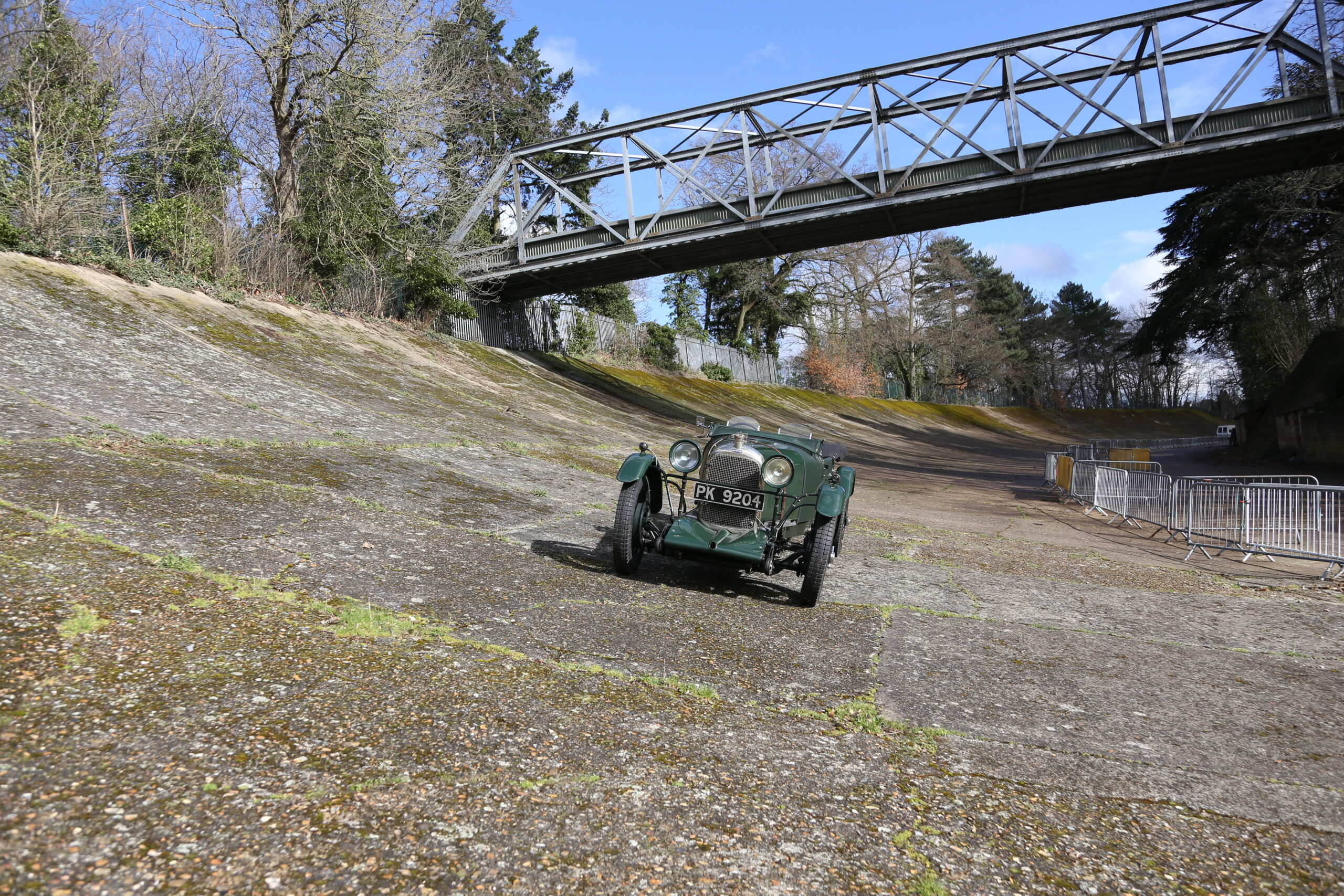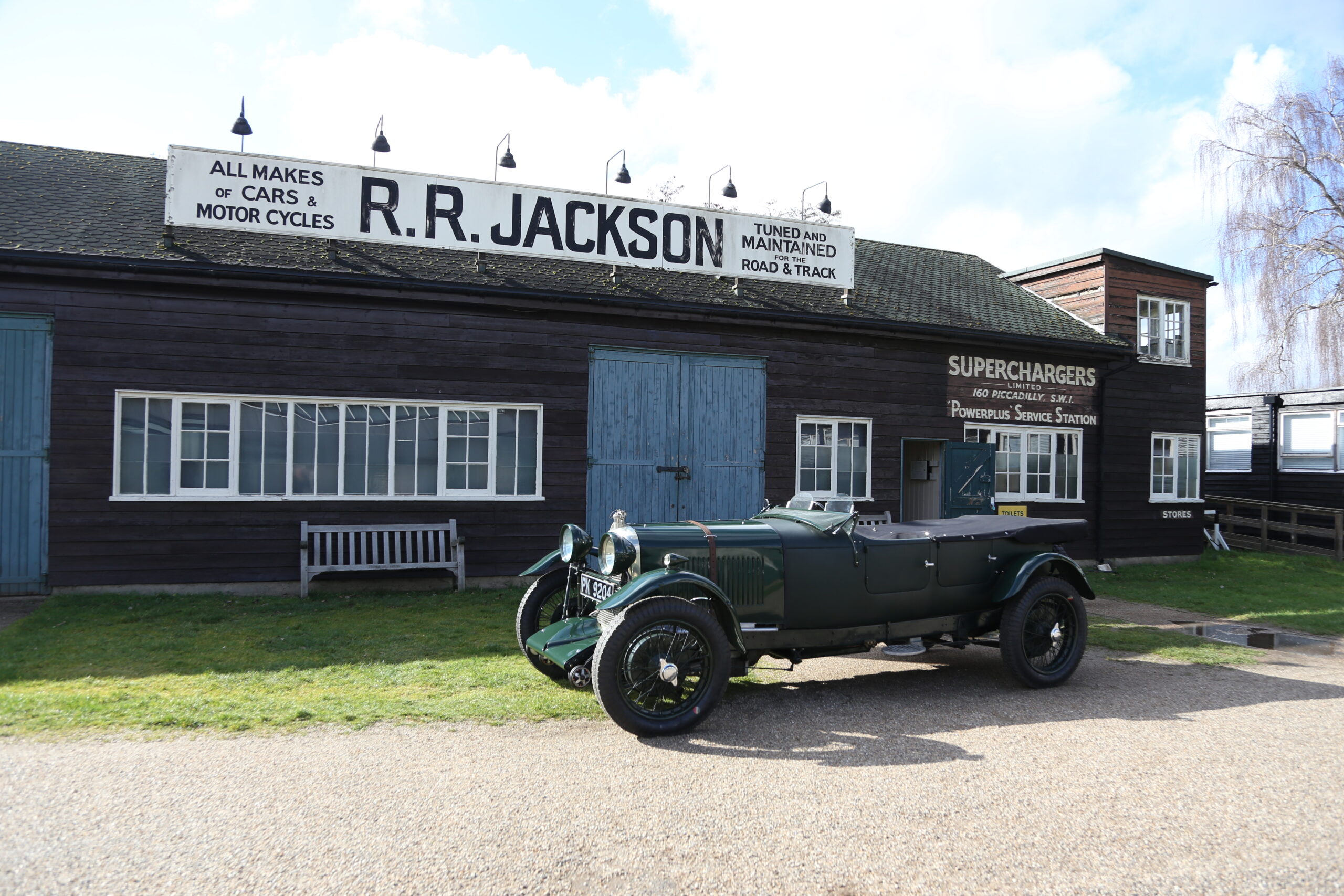
Few pre-war cars carry their era so plainly in their details: the cut of the scuttle, the purposeful cycle wings, the upright stance of a long-range tourer prepared for endurance rather than glamour. This car, chassis 9414 registered PK 9204, is a 1929 Lagonda 2-Litre Low Chassis Tourer for sale that sits squarely in that tradition, tied not only to Lagonda’s engineering ambitions but also to the organised competition culture that defined British motorsport between the wars.
The “Low Chassis” concept was more than a stance exercise. Lowering the body line and refining the package served a clear purpose: stability at speed, improved control on fast road sections, and a more compact silhouette suited to long-distance events. In period team form, the Tourer body balances practicality with intent. The cockpit is open and functional, with the kind of wind management solutions that speak to competition use: a fold-flat screen arrangement and aero screens that prioritise reduced drag and clear sightlines over touring comfort.
The visual language is honest and mechanical. The long bonnet and exposed hardware are not ornamental; they are the logical outcome of a chassis built around a sizeable four-cylinder engine, long-distance fuel requirements, and the need for rapid access during events. The cycle wings, spare wheel mounting, and hood provisions read as equipment rather than decoration, and that is precisely the point: this is a sports tourer shaped by use.
At the centre is Lagonda’s 1,954cc OHV inline-four, a design notable for its period sophistication and the marque’s willingness to pursue breathing efficiency and serviceability in a world still learning what “high-speed reliability” really meant. In team specification, these engines were tuned beyond standard road form, aimed at sustained running rather than short bursts. On this example, SU carburettors are fitted, with the earlier Zenith arrangement noted as accompanying equipment, reflecting a practical approach to running and fettling while respecting the car’s historic configuration.
Power is delivered through a 4-speed manual gearbox described in period team context as a close-ratio set-up—exactly the sort of choice you make when you care more about keeping an engine in its working band than about relaxed motorway gearing. The layout is classical and direct: engine up front, drive to the rear wheels, and the kind of live-axle robustness that endurance events demanded. In the original team specification, a 4.0:1 final drive is noted, a ratio that underlines the car’s competition intent: brisk acceleration and flexibility mattered as much as ultimate speed when races included pit work, traffic, and changing surfaces.
The late 1920s were a decisive period for Lagonda. The company’s identity was being forged not merely through catalogues but through results, reliability, and the reputational weight of organised competition. The Low Chassis 2-Litre Tourers associated with the Fox & Nicholl team represent a particularly interesting strand of that story: cars developed and prepared to work hard, run long, and demonstrate that a well-engineered British two-litre could survive in serious company.
This specific car is widely associated with ownership by Robin Jackson and competition appearances managed within the Fox & Nicholl sphere, placing it within an enthusiast-led but professionally organised era of racing—private owners operating with the discipline and preparation that anticipated later works structures.
PK 9204 is linked to notable period appearances including the 1929 Brooklands Double Twelve, where the Jackson/Broomhall pairing is recorded among the finishers, and participation in the Irish Grand Prix at Phoenix Park, Dublin—an early chapter in what would become a significant fixture in the inter-war racing calendar. These events were not gentle exhibitions. They were tests of mechanical sympathy, preparation, and the driver’s ability to conserve a car over distance while maintaining pace.
That context matters when you consider what a Low Chassis Lagonda is like to drive. The experience is not about isolated performance figures; it is about rhythm and mechanical conversation. Steering inputs are deliberate, the chassis communicates through its springs and tyres, and the engine’s character is defined by tractability and the satisfaction of maintaining momentum. A close-ratio gearbox encourages you to work with the engine rather than against it, and the open Tourer format gives you the era in full—sound, wind, and the sense of speed that only pre-war cars deliver honestly.
The documentary trail is part of this car’s interest. Surviving registration material and a recorded chain of ownership place PK 9204 within a long UK history, including its later stewardship by the Lagonda specialist Captain Ivan Forshaw, whose name is closely connected with preserving and restoring significant pre-war Lagondas. Under that umbrella, the car benefited from sympathetic attention and the sort of parts knowledge that only comes from decades of marque familiarity.
More recent maintenance, undertaken with the intention of reliable event use, is noted to include a radiator re-core, the fitting of SU carburettors, a new set of Blockley tyres, a re-made tonneau cover, and attention to seating—work consistent with careful recommissioning rather than cosmetic reinvention. The result is a car that reads as a historically significant sports tourer with the practical measures required to be used as intended.
For the collector drawn to cars that feel engineered rather than curated, this 1929 Lagonda 2-Litre Low Chassis Tourer for sale offers something increasingly difficult to find: an inter-war machine with authentic competition narrative, intelligible mechanical specification, and the understated dignity of a car built to finish what it started.