There is a particular kind of dignity to MG’s late-1930s “sports saloon” idea: a car that can carry four in genuine comfort, yet still feels rooted in the marque’s tradition of tidy road manners and well-judged engineering. This 1938 MG VA Saloon for sale sits within MG’s SVW family (SA, VA, WA), produced in the narrow window before the Second World War closed the chapter entirely. The appeal of the VA is not about noise or spectacle; it is about proportion, material quality, and the sense that every control was designed to be used, not merely admired.
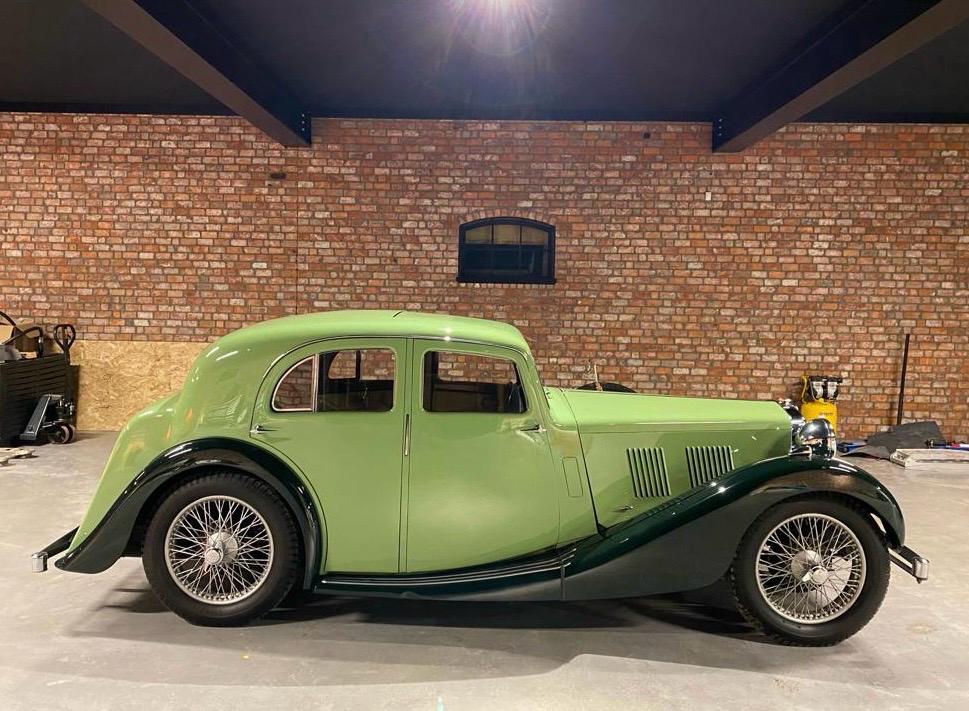
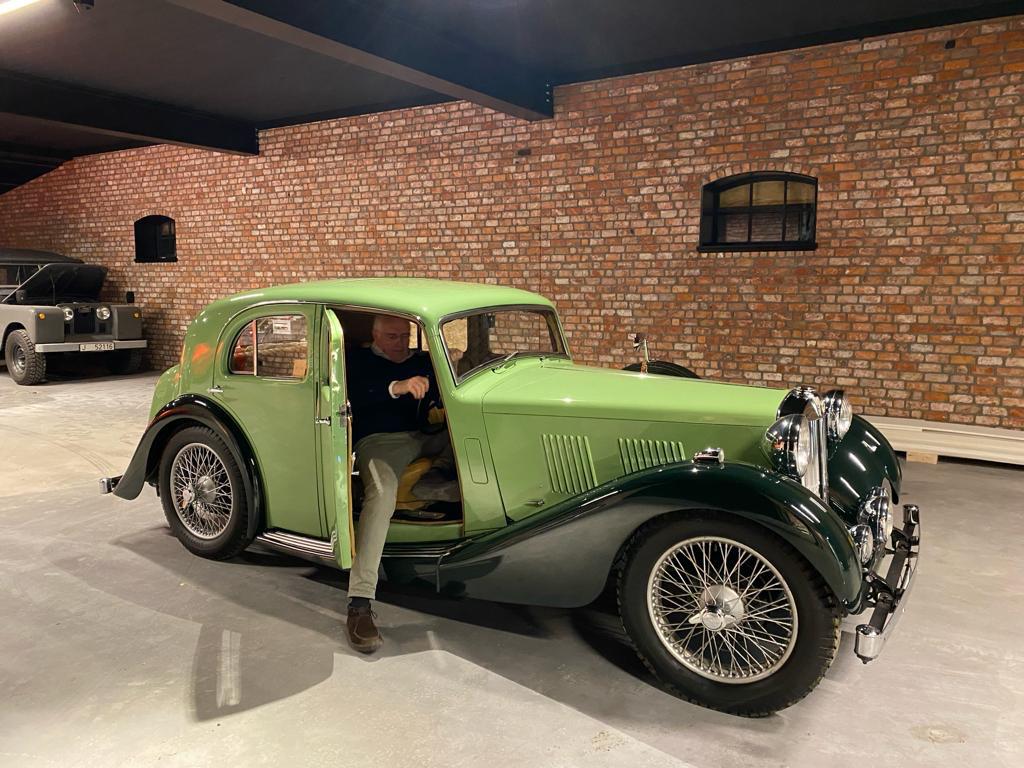
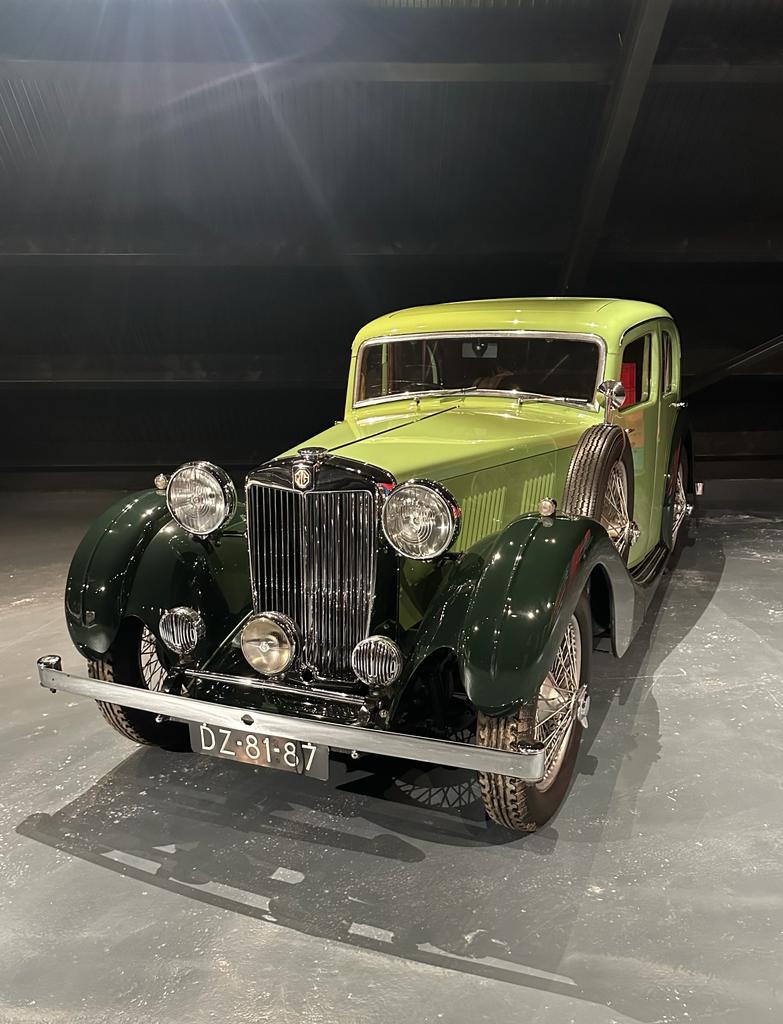
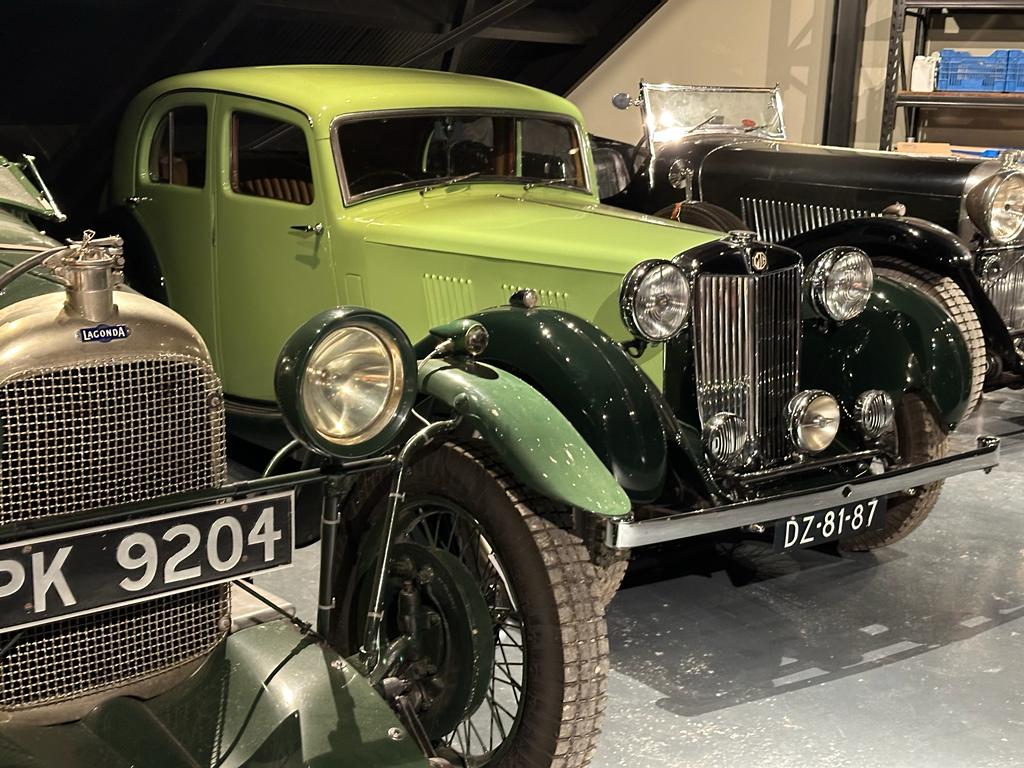
The VA was introduced as MG’s “One and a Half Litre,” a smaller companion to the larger SA, and its proportions reflect that brief: a long bonnet, flowing wings, a compact upright cabin, and a stance that looks formal without becoming heavy. The tall grille, freestanding headlamps, and brightwork accents give the car an architectural presence. In Saloon form the roofline remains deliberately upright, lending the interior a surprisingly airy feel and giving the car the composed, official manner for which the SVW range is remembered.
Construction follows the era’s best practice, with a timber frame beneath metal outer panels. That method is a major part of pre-war charm, and it is also why correct restoration work can be so involved: craftsmanship matters as much as parts. This example is finished in a two-tone combination of Willow Green and British Racing Green, paired with a biscuit leather interior that emphasises warmth and period character. The cabin’s centrepiece is the richly grained wooden dashboard with gold-toned instruments and fittings. It is an interior language of polished timber, tactile switchgear, and clear, purposeful layout—less about decoration, more about atmosphere.
In standard form, the VA used a tuned overhead-valve four-cylinder of MG’s TPBG family with twin SU carburettors. For this car, the history file describes an engine overhaul in which the original 1.5-litre block was bored out to approximately 1.7 litres (around 1,707cc), described as aligning with the period “police specification” approach used on uprated SVW cars. The result is a mechanically sympathetic way to add a little more flexibility and urge, while keeping the engine’s period character intact: a long-stroke rhythm, a willing pull through the mid-range, and the calm mechanical confidence that suits a pre-war touring saloon.
The engine is paired with a four-speed manual gearbox. Periodly, the VA is associated with a semi-synchromesh arrangement—synchromesh on the upper gears rather than across all four—which suits the car’s deliberate, unhurried driving style. The dossier describes this example as shifting smoothly and running well, consistent with a car restored for use rather than static display.
SVW is MG shorthand for the SA, VA, and WA models produced in the late 1930s. These cars blend MG’s sporting identity with the realities of making a refined, well-appointed saloon for broader use. In that context, the VA is often viewed as the sweet spot: it offers much of the larger car’s poise and cabin dignity, yet in a more compact, lighter-feeling package that can seem surprisingly responsive when driven with the right rhythm. It is not a sports car in saloon clothing; it is a confident touring car with MG’s engineering sensibilities woven through it.
A properly sorted VA is less about outright speed and more about sustained mechanical ease. The steering rewards smooth inputs, the chassis feels settled when allowed to flow, and the engine’s torque-led character encourages relaxed progress. With correct setup, the driving experience becomes a conversation with the road: measured gear changes, unforced acceleration, and a reassuring sense of mass and stability that modern lightweight cars rarely replicate. It is a pre-war saloon that feels designed for real distances—roads that move, towns that slow you down, and open stretches where the car can settle into its stride.
This MG VA is described as original British, meaning it is a right-hand-drive car. It was produced on 11 October 1937 and first registered the following year. It later spent time with a Dutch collector (from 2008), before being registered on Dutch plates in mid-2019. The restoration is described as comprehensive and completed in stages: the body was dismantled and repainted in the correct two-tone colours, the interior was renewed with re-trimmed seats and door panels, and key systems such as the wiring harness and brakes were addressed with new components. A photo report of the restoration is noted as available, which is especially valuable on ash-framed, pre-war construction where workmanship is everything.
For collectors, the documentation matters almost as much as the specification. This example is described as richly documented, including an original manual and parts catalogue, older British paperwork, and a trail of invoices, inspections, correspondence, and period information spanning decades. The file also records ownership by the Neave family around the mid-1950s, adding a human thread to the car’s story and reinforcing the sense that it has been preserved with care rather than merely kept running.
As a whole, this is a pre-war MG that honours the “sports saloon” promise in both presentation and substance. For anyone seeking a 1938 MG VA Saloon for sale with sympathetic restoration, rare accompanying parts, and the kind of paper trail that deepens ownership, this example offers an unusually complete and characterful package.