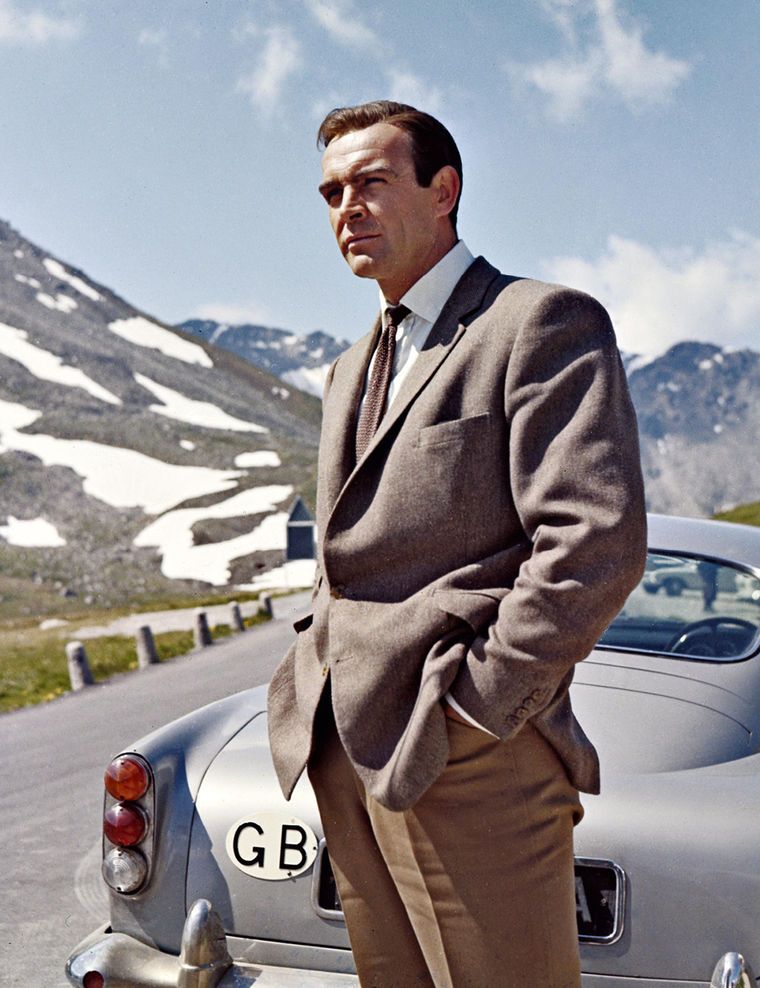
Some cars become famous through engineering. Others through racing. Very few become immortal in a single cinematic moment. The Aston Martin DB5 belongs to that rare final category. With Sean Connery at the wheel and the dramatic landscape of the Furka Pass in Switzerland as its backdrop, the DB5 was transformed from an elegant British grand tourer into a global symbol of style, performance and intrigue.
Before the DB5, Aston Martin was already building motor cars of exceptional character, though always in relatively modest numbers. From 1957 onward, the firm produced just over 500 DB3s across two years. The DB4 followed from 1958, with approximately 1,100 examples built over a five-year period. That meant Aston Martin was constructing, on average, around 200 to 250 cars per year — a level of exclusivity that suited the marque’s refined reputation, but kept it within a relatively small circle of admirers.
The DB5 changed that trajectory entirely. Around 1,000 examples were sold in only a few years, effectively doubling Aston Martin’s annual output to roughly 400 to 500 cars. For the company, it was a remarkable commercial leap. It would take until the Ford era and the introduction of the DB7 in 1994 before Aston Martin would reach that kind of production success again.
Of course, numbers alone do not explain the DB5’s extraordinary status. Its ascent was inseparable from Sean Connery, whose portrayal of James Bond gave the car a mythic presence that extended far beyond the usual boundaries of the motor industry. Connery became a legend, and the DB5 followed him into that same rarefied territory.
For many, the connection began in childhood. The DB5 was not simply admired on screen; it was recreated in miniature, remembered in detail, and cherished in imagination. A generation grew up treasuring Corgi Toys models of the Aston Martin, complete with ejector seat and all the fantastical accessories that made the car feel as if it belonged equally to the world of engineering and the world of dreams.
The image of the first DB5 on the Furka Pass remains one of the most memorable visual pairings in motoring and film history. Switzerland provided more than scenery; it offered scale, atmosphere and permanence. The mountain road, the crisp Alpine light and the effortless composure of the Aston Martin created a scene that still feels perfectly judged decades later.
The fuel station visible down the road, which played a prominent role in the sequence, has since been demolished. Yet the location itself still carries the echo of that moment. Those who travel through the region can still find the spot where this photograph was taken, and stand, however briefly, at the intersection of cinema, motoring history and cultural memory.
There are appearances that endure because everything aligns: the machine, the setting, the personality and the timing. Sean Connery brought charisma, confidence and presence. The Aston Martin DB5 brought elegance, pace and unmistakable form. Together, they created something larger than either could have achieved alone.
It remains an unforgettable appearance by one of the greatest actors alongside one of the greatest sports cars ever made — a moment that did not merely elevate the DB5, but helped define Aston Martin for the world.